
There are no bad things that happen.
That may sound shocking, crazy, ridiculous, or insensitive.
There are things that happen that lead us to feel sad, anxious, in pain, fearful, angry, outraged or overwhelmed.
This does not mean they are bad things.
Anxiety, pain, anger, sadness, exhaustion are all feelings,experiences.
“Bad” is a judgement, an evaluation. It’s part of a story we tell ourselves, usually without knowing it’s a story.
“Bad” is a conceptual sticker we stick on certain experiences. A label we add to our story about something that’s happened.
As Shakespeare's Hamlet says, “there is nothing either good or bad, but thinking makes it so.”
The story is something we make up. Evaluation, judgement,labels are part of that story. They are a big part of what keeps a story, and any associated pain, sadness or fear, going.
***
We need bigger stories
I think that stories about things being “bad” as opposed to simply “painful” or even “excruciatingly painful” are the result of our thinking being too small.
Most of us have quite a small view of the world. Though we don’t think so (that’s part of the smallness)
We think we are intelligent, understand things quite well. We think we’ve been around long enough, have read enough newspapers, or therapy books, or listened to enough podcasts, or had enough chats with friends to pretty much understand how things are.
So, if something appears “bad”, we assume it probably is.
We don’t notice how small our thinking is.
How vast, mysterious, unknowable our world, and our Self actually is.
Nor how concrete, how certain, how automatic our judgements are when really we don’t know much.
Two stories come to mind …
***
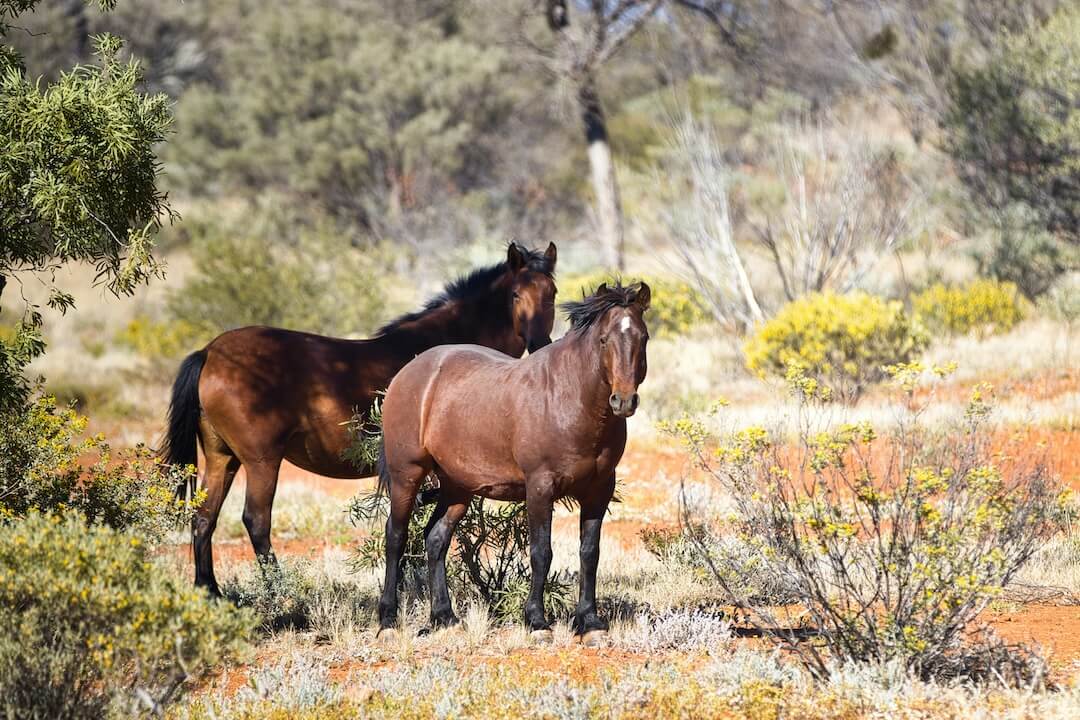
The Farmer and the runaway horse.
One day the farmer’s horse runs away. Disappears.
“Oh no!” say the neighbours. “Great misfortune. Now you have no horse to plough your fields. This will be bad for you.”
The farmer says simply, “could be good, could be bad”.
Two days later the horse returns, and it brings with it a wild female horse. It has found a companion.
“How lucky” say the neighbours. “Another horse. What good news. Now you have two horses and can grow more food and become wealthy”
“Could be good, could be bad” says the farmer.
The farmer’s son needs to break in the new wild horse; to saddle it and help it learn to take a rider. He tries but the wild horse throws him. He breaks his leg.
“Oh no” say the neighbours. “You son cannot walk for many months! Who will help you on the farm. This is very bad, you will not have enough produce this year. So sorry for you”
“Could be good, could be bad” says the farmer.
The next week the army come calling. There is a war in distant lands and all young able-bodied men are required by the King to go fight.
The farmer’s son has a broken leg. He cannot go to war.
***
Our thinking minds are like the neighbours. Well intentioned. Trying to help. Thinking each time, over and over, that they see things as they are. That their evaluations are accurate. They believe they seethe whole picture.
The farmer knows this is never true.
The farmer is more like our Awareness – the space in which all the evaluations come and go.
Could we be more like the farmer?
Could we rest in Awareness itself, the space in which all evaluation appears and then dissolves over and over?
Must we have so many opinions about these things we call‘good’ and ‘bad’?
***
Another story …
On Gods and Demons
Machik Labdron was a famous awakened female teacher and mystic in Tibet. She had many teachings and practices that turned upside down our common ideas of good and bad.
She taught that people and events in life we might think are Gods / Divine might lead us to become complacent, sleepy, dull and indulgent.They feed our egos, our sense of entitlement, comfort seeking, and self centredness.
And that people and events we assume are negative – Demonic/ Terrible might be exactly what we need to wake up, to face some inner obstacle, to mature. To address old historic patterns, misconceptions that have held us back for decades.
It is not quite so easy – to know what is good and what is not.
We know what is painful and what is pleasant, sure.
But let us not mistake the directness of those experiences with the oh-so-sticky labels we add on to it all.
***
Last month I had some difficult weeks. All sorts of emotional and physiological turmoil as I adjusted to new situations in my life and relationship.
Challenging? Certainly.
Painful? Often.
Intense? For sure.
Bad?
I don’t think so. So much learning, so much insight, so much(eventually) clicking into place of understandings, patterns, habits that havebeen with me a long time.
Buddhists call it Karma.
Psychologists call it conditioning or trauma.
John Hegley – poet and optician said it as elegantly as anyone
“As my grandmother used to say, before you complain about the muck on someone else’s glasses, make sure you aren’t talking about the muck on your own glasses!”
We all have muck on our own glasses. That’s just part of being human.
It’s painful when we get to encounter and see clearly that muck, and the impact that it has on oneself and on others.
But bad?
I don’t think so.
Good?
Very possibly, as it turns out.
If we must have a word perhaps “beautiful” is a better, and more accurate one.
***
Dropping your evaluations
In the end perhaps the entire universe is just trying to wake us up. Doing whatever is necessary to nudge and cajole us into seeing clearly and letting go into what is.
That’s another story of course. But I prefer it to constantly evaluating the good and bad things that happen in my life.
What happens if you drop a“bad” judgement from something you are experiencing or dealing with this week?
What inner and outer possibilities does that open up?
If you MUST have a story (and we humans do like a good story) what happens if you experiment with this one:
“What I am experiencing inthis situation is exactly, precisely, perfectly what I need to be experiencing right now in order to learn, wake up and become more fully who I am”
***